


You’ve probably noticed something strange happening with your organic traffic lately. Your Google rankings look solid, your keyword positions haven’t changed much, but somehow fewer people are clicking through to your site. You’re not imagining things, and you’re definitely not alone.
It’s true that Google’s market share in search is still the biggest slice of the pie. It processes more than 8.5 billion searches daily (210x more than ChatGPT).
While the volume is high with Google, you can’t deny the shift in people’s behavior. A lot of queries that used to end up in Google are now split between search engines and large language models (LLMs).
Because of this, it’s critical to do audits. As they say, you can’t manage what you can’t measure. But what’s the deal with SEO audit? Is it still the same as before? How did GEO change it?
In this guide, I’ll break down:
- The difference between SEO audits and GEO audits
- Explain why you need both
- And how much these audits usually cost
What is an SEO Audit?
An SEO audit is your website’s health check for traditional search engines like Google. It’s the process of evaluating how well your site is optimized to rank on search engine results pages.
Think of it as taking your car to a mechanic. You’re looking for anything that might be slowing you down or preventing you from reaching your destination, which in this case is the top of Google’s search results.
A comprehensive SEO audit covers three main areas:
Technical SEO
This is the foundation. Can search engines crawl your site? Is it mobile-friendly? Are your pages loading fast enough? Tools like Screaming Frog help you identify technical issues that might be holding your site back.
On-Page SEO
This examines how well your content communicates with search engines. Are your title tags optimized? Do your headers make sense? Are you using the right keywords naturally throughout your content?
Off-Page SEO
This looks at your site’s authority across the web. How many quality backlinks do you have? Is your brand being mentioned in reputable places? What’s your domain authority compared to competitors?
For early-stage startups, SEO audits are still critical. Without them, you’re essentially flying blind, hoping Google somehow finds and ranks your content.
What is a GEO Audit?
A GEO audit examines how well your content performs on AI-powered search platforms such as ChatGPT, Perplexity, Google’s AI Overviews, and Claude.
Unlike traditional SEO, where the goal is to rank high on a search results page, GEO focuses on becoming the source that AI platforms cite, summarize, or recommend in their responses.
Here’s the key difference: With SEO, you’re competing for one of 10 spots on page one. With GEO, you’re competing to be one of maybe 2-3 sources that an AI directly references when answering a question.
For early-stage startups, this matters more than you think. When someone asks ChatGPT for SaaS recommendations, you want your product to show up in that answer, not just in a Google search they may never perform.
I wrote more about how ChatGPT Atlas might be impacting SEO and what it means for your visibility strategy.
GEO Audit vs SEO Audit: Key Differences
While both audits aim to improve your online visibility, they focus on fundamentally different systems. Here’s how they compare:
Primary Goal:
- SEO Audit: Rank higher on search engine results pages
- GEO Audit: Become a cited source in AI-generated answers
Success Metrics:
- SEO Audit: Keyword rankings, organic traffic, click-through rate, backlinks
- GEO Audit: AI mention frequency, citation rate, share of AI-generated responses
Content Strategy:
- SEO Audit: Target specific keywords, optimize meta tags
- GEO Audit: Use conversational language, provide direct answers, ensure factual accuracy
Technical Focus:
- SEO Audit: Crawlability, site speed, mobile-friendliness
- GEO Audit: Structured data, semantic HTML, AI crawler accessibility
Authority Signals:
- SEO Audit: Backlinks, domain authority
- GEO Audit: E-E-A-T signals, entity recognition, verified expertise
The most important thing to understand: these aren’t competing strategies. GEO builds on the foundation of good SEO. You can’t skip traditional SEO and jump straight to GEO optimization.
GEO Audit vs SEO Audit Cost: What to Expect
I know budget is always a concern for early-stage founders, so let’s talk real numbers.
Traditional SEO Audit Costs
Most professional SEO agencies charge between $500 and $5,000 for a comprehensive audit, depending on your site’s size and complexity.
For example, our team’s starting cost is $550 for a full SEO and GEO audit. The cost may vary if there are more sites or items to check beyond our current list.
Pro tip: If you want a free SEO audit, just message us in the chat box and type “SEO audit”.
GEO Audit Costs
Here’s where it gets interesting. Since GEO is relatively new, pricing varies wildly. I’ve heard from founders that some agencies are charging premium rates ($3,000-$10,000+) for what they call “AI optimization audits.”
But here’s what I’ve learned after running my own experiments with GEO: you don’t necessarily need to hire a specialized “GEO agency.” Most of what makes content perform well in AI search is actually just good SEO with a few specific additions.
Budget-Friendly Options for Startups:
If you’re working with limited resources, focus on these cost-effective approaches:
- Start with a solid SEO foundation using free tools like Google Search Console and Bing Webmaster Tools.
- Add GEO-specific elements yourself, like manually checking how your site shows up on ChatGPT.
- Consider fractional marketing services that include both SEO and GEO work for a fraction of a full-time hire.
Free GEO Audit Tools for Startups
The good news: you don’t need expensive tools to start optimizing for AI search. Here are the most effective free methods I use:
Manual Checking (The Most Important Step):
This costs zero dollars and gives you the most valuable insights. Simply open ChatGPT, Perplexity, and other AI platforms, then ask questions your customers would ask.
For example, if you’re a project management SaaS, ask: “What are the best project management tools for startups?” or “How do I track team productivity remotely?”
Document whether your brand appears in the responses. If it does, is the information accurate? If it doesn’t, which competitors are being mentioned instead?
I’ve written a detailed guide on how to track brand mentions on ChatGPT that walks through this process step by step.
You can also use GEO tools. I’ve compiled a list here:
12 Platforms for Monitoring Brand Mentions in ChatGPT Responses
Google Search Console & Bing Webmaster Tools:
Both of these free tools are essential for GEO because they show you how search engines (and by extension, AI platforms) interact with your site.
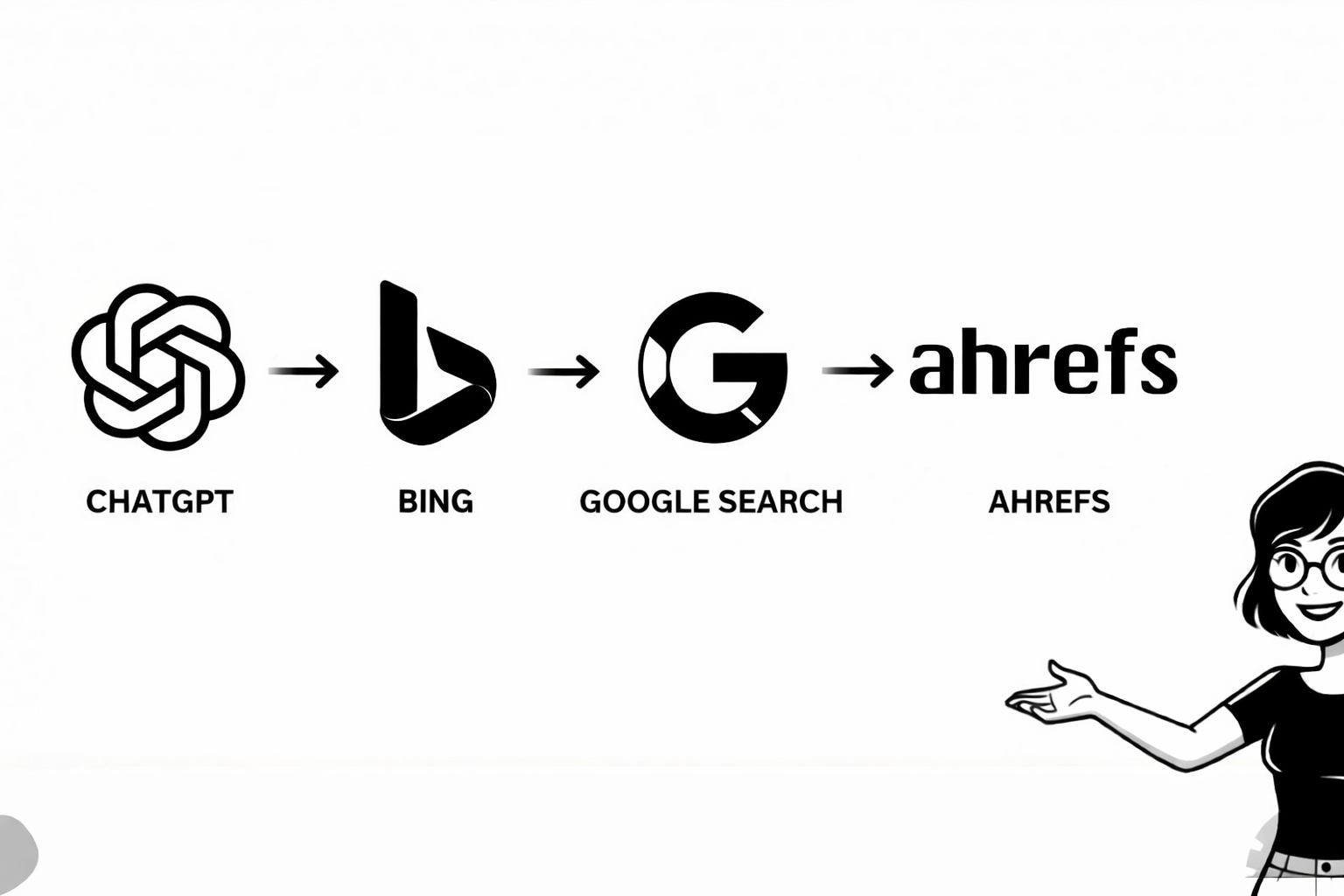
Why Bing matters more than you think: ChatGPT uses Bing’s web search when it needs current information. If your site isn’t properly indexed in Bing, ChatGPT can’t reference your latest content.
Budget-Friendly Paid Options:
If you do have a small budget ($50-$100/month), consider tools that serve double duty for both SEO and GEO, like Ahrefs or Semrush. While primarily designed for traditional SEO, they help you build the content authority that AI platforms value.
Essential Components of a GEO Audit
When conducting a GEO audit, you’re looking at four key areas:
Technical AI Accessibility
Can AI crawlers actually access your content? Key technical checks include:
- Ensuring your core content is in the HTML (not just rendered by JavaScript)
- Removing unnecessary blocks in your robots.txt
- Adding proper structured data (schema markup)
- Keeping your content fresh with clear publication dates
Check out my article on how to know if ChatGPT is crawling your site for specific technical steps.
Content Structure and Semantic Clarity
AI models need to easily parse and understand your content. This means:
- Using clear, descriptive headings that mirror how people ask questions
- Breaking content into short, quotable sections (think 2-3 sentence paragraphs)
- Providing direct answers immediately after questions
- Using bullet points and numbered lists strategically
I learned this the hard way when writing about how to use ChatGPT for SEO. The posts that performed best in AI search all had one thing in common: they answered questions directly and concisely.
Entity Recognition and Brand Consistency
AI platforms need to understand who you are as an entity, a specific company or person, not just a collection of keywords.
This requires:
- Consistent use of your brand name across all platforms
- Clear author bios with credentials
- Organization schema markup
- A comprehensive “About” page
- Presence in authoritative databases like Wikidata
Authority Signals (E-E-A-T)
Experience, Expertise, Authoritativeness, and Trustworthiness matter even more for AI search than traditional SEO. AI models prioritize content from recognized authorities.
Build this through:
- Clear author attribution with real credentials
- Citing reputable sources in your content
- Getting mentioned on high-authority sites in your industry
- Publishing original research or unique data
What’s Next?
Search has fundamentally changed. This doesn’t mean SEO is dead. It means SEO is evolving, and GEO is the natural next step.
The good news: many of the principles that make content rank well in Google (clear structure, authoritative sources, comprehensive answers) also make it perform well in AI search.
You don’t need a massive budget or a specialized AI agency. You just need to understand that search visibility now means being found in two places: traditional search engines and AI-generated answers
Ready to optimize your content for both traditional search and AI platforms? Book a call with me, and let’s discuss how to position your startup for success in this new era of search: bit.ly/irenequickcall
Want to learn more about GEO? Grab my free GEO course.
FAQs About GEO Audit vs SEO Audit
What is the difference between Google SEO and GEO?
Google SEO optimizes your content to rank on Google’s search results pages. GEO optimizes your content for citation and recommendation by AI platforms like ChatGPT, Perplexity, and Google’s AI Overviews. SEO focuses on getting clicks from search results, while GEO focuses on being the source of AI-generated answers. Both are essential for modern online visibility.
What is a GEO audit?
A GEO audit is a systematic review of how well your website and content perform in AI-powered search platforms. It examines whether AI models can access, understand, and cite your content when answering user questions. The audit looks at content structure, entity recognition, authority signals, and technical accessibility specific to how AI platforms evaluate and reference information.
What is an SEO audit?
An SEO audit is a comprehensive analysis of your website’s ability to rank on traditional search engines like Google and Bing. It examines technical factors (site speed, crawlability, mobile-friendliness), on-page elements (keywords, meta tags, content quality), and off-page signals (backlinks, domain authority). The goal is to identify and fix issues that prevent your site from ranking well in organic search results.
How much does a GEO audit cost?
GEO audit costs vary widely since it’s a relatively new service. Professional agencies charge anywhere from $1,500 to $10,000+, depending on site size and scope. There is no industry price right now, as GEO is still very new. I highly recommend doing an SEO and GEO audit as a combination.


