


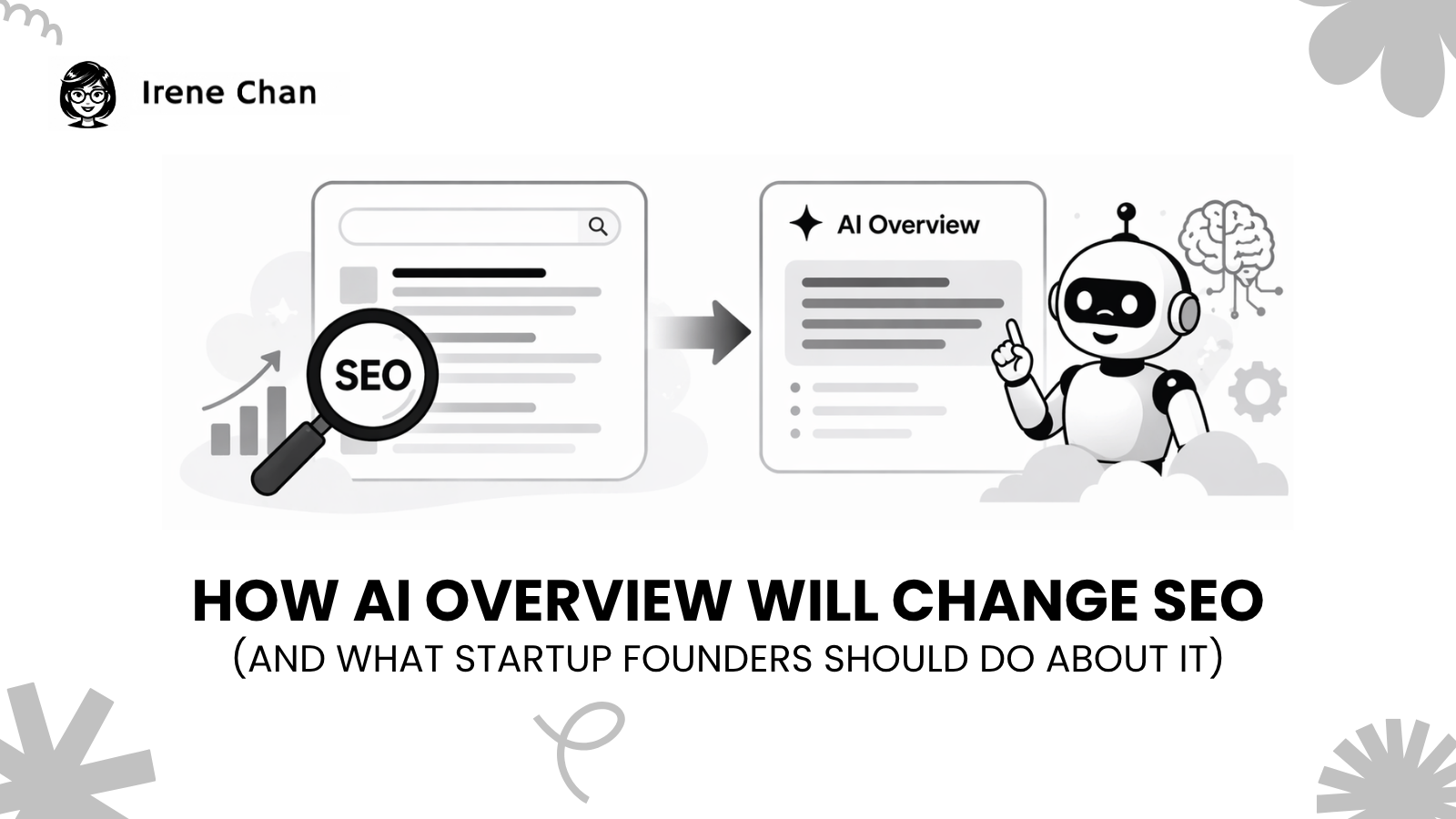
You did everything right. You published consistently, optimized your posts, and watched your rankings climb. Then, traffic started dropping, and you couldn’t figure out why. Sound familiar?
Google AI Overviews are likely a big part of the answer. These AI-generated summaries now appear at the top of many search results, answering users’ questions before they ever click a link. For startup founders who depend on organic content to drive awareness and leads, this is a real shift, and it’s happening fast.
But here’s what I want you to hear before we go further: this is not the death of SEO. It’s a filter. Generic content gets summarized and bypassed. Content with a real point of view, original insights, and clear structure gets cited.
This article will break down:
- How AI Overview will change SEO
- What it means for your blog specifically
- The practical steps you can take this week without needing to start over
What Is Google AI Overview and Why Does It Matter for SEO?
Google AI Overview is an AI-generated summary that appears at the very top of certain search results. Instead of showing you ten blue links, Google synthesizes information from multiple sources and delivers a direct answer, right there on the results page.

Think of it as a smarter, more conversational version of the old featured snippet. The key difference: AI Overviews can pull from multiple sources simultaneously and generate a response in natural language, often without requiring the user to click anything.
For SEO, this changes the game at a fundamental level. Your goal used to be simple: rank on page one, earn the click.
Now, ranking on page one might not be enough. The new goal is to be the source AI chooses to cite.
What Triggers an AI Overview?
Not every search query triggers an AI Overview. Understanding what does can help you identify which of your content is most at risk, and which is most positioned to win.
AI Overviews are most commonly triggered by:
- Informational queries: “How to”, “what is”, and “why does” searches. These are exactly the types of questions most startup blogs are built around.
- Long-tail, conversational queries: The more specific and natural the phrasing, the more likely an AI Overview appears. This is both a risk and an opportunity.
- Well-structured content: Pages with clear headers, bullet points, and direct Q&A formats are more likely to be pulled as sources.
- Commercial and transactional queries: This is expanding. AI Overviews are no longer limited to purely informational results. Comparison posts, reviews, and “best of” content are increasingly affected.
How AI Overviews Are Affecting SEO for Blogging
Let’s bring this down to the blog level, because that’s where most startup founders are feeling it most.
Zero Clicks Equals Less Traffic
This isn’t theoretical. One of our clients had 90% of their traffic coming from Bing. In March 2026, Bing rolled out an update that more prominently featured AI Overviews in search results. Almost overnight, we lost 40% of their clicks. Real numbers, real revenue impact.
And this client isn’t an outlier. As AI Overviews absorb more informational queries, the pattern is the same across the board: impressions hold steady, but clicks quietly disappear. Users are getting their answers without ever visiting your site.
If you’ve been wondering why your organic traffic is declining despite solid rankings, this is likely a big part of the reason.
That’s Why Getting Cited Matters
Here’s the silver lining from that same client story: because we had already been building authority and structured content, the site began getting cited in Copilot responses. The brand is now being mentioned in AI answers, even without the click.
Think of an AI citation like being quoted in a trade publication. The reader may not visit your site directly, but your brand is being associated with the answer. That visibility compounds. It builds trust. And over time, it brings in the kind of traffic that already knows who you are before they land on your page.
This is why getting cited in AI Overviews is the new ranking. It’s not a consolation prize. It’s the goal.
Diversify Where Your Content Lives
Here’s something most founders overlook: AI Overviews don’t only pull from your website. Google also surfaces content from YouTube, Reddit, forums, and other platforms, especially for less competitive, niche queries.
That means a well-structured YouTube video answering a specific question your audience asks, or a thoughtful Reddit comment in a relevant community, can show up in an AI Overview just as easily as a blog post. Sometimes more easily.
For example, we repurpose our blog posts to YouTube videos.
In this screenshot, you’ll see that both results are from our client. First, it shows the blog post, and the second one shows the video version of the blog post.

If you’re a startup founder with limited content resources, this is actually good news. You don’t have to produce more blog posts. You can repurpose what you already have into a short YouTube explainer, drop insights into a relevant Reddit thread, or contribute to LinkedIn conversations in your niche.
Spread your expertise across the platforms AI is already pulling from, and you increase your chances of being cited, regardless of where the user ends up.
What Startups Can Do Right Now (Without Starting Over)
You don’t need to tear down your content strategy. You need to upgrade it. Here’s what I recommend, prioritized for lean teams with limited time:
- Audit Your Highest-Traffic Posts First
Open Google Search Console (it’s free) and identify which posts are targeting informational queries where AI Overviews are now appearing. These are your highest-priority posts to update. Look for queries where your impressions are holding but clicks are falling. That’s a telltale sign an AI Overview is absorbing the traffic.
- Add Structure to Existing Content
You don’t need to rewrite everything. Start by restructuring what you have:
- Add or tighten your H2 and H3 headings so each section has a clear question or topic
- Make sure the first paragraph of each section answers the question directly
- Add a FAQ section at the end with 4-6 questions your audience would actually ask
- Use bullet points to break down steps, comparisons, or lists
Not sure how to apply a zero-click search strategy to your existing content? I break down exactly what to look for and fix in that guide.
- Inject Original Perspective Into Every Post
This is the most important thing you can do. One unique paragraph per post, something AI can’t replicate, is enough to start. That could be:
- A real client outcome or data point
- A personal take on why the conventional advice is incomplete
- A specific example from your own experience building or marketing your product
AI systems are increasingly selective about which content they crawl and cite. Original data and unique insights are harder to replicate and more likely to be referenced.
- Build Topical Authority Through Content Clusters
Rather than publishing one-off posts on scattered topics, build a cluster of 4-6 related articles around one focused theme. This signals expertise to both Google and AI platforms without requiring more volume.
We did exactly this at IreneChan.co, doubling down on AI and SEO topics, and it drove a 156% increase in SEO traffic using an AI overview SEO strategy in six months. Topic depth beats topic breadth every time.
5. Add FAQ Schema to Your Blog Posts
FAQ schema helps AI systems understand your content’s question-answer structure, making it easier to pull as a citation source. Adding FAQ schema to each blog post, individually rather than site-wide, is one of the most impactful low-effort changes you can make.
I’ve written a detailed guide on how to appear in Google AI summaries using FAQ schema and ChatGPT.
Time estimate: Restructuring 3–5 existing posts with better headers, a FAQ section, and one original insight per post takes roughly 2–3 hours. No new content required.
Conclusion: AI Overviews Are a Filter, Not a Funeral
AI Overviews are changing what it means to win at SEO. The old measure was the click. The new measure is the citation. For startup founders and lean marketing teams, that shift is actually good news: you don’t need more content, you need better content.
Generic posts get summarized and bypassed. Posts with a genuine point of view, original examples, and clean structure get cited. And getting cited, even without a direct click, is still brand visibility that compounds over time.
Start with your top 3-5 posts. Add structure, inject one original insight per article, and build out a FAQ section. That’s your AI-era content upgrade, and it doesn’t require starting from scratch.
If you’re not sure where to begin or don’t have the bandwidth to audit and restructure your content solo, start with an SEO audit.
FAQs About How AI Overview Will Change SEO
Will AI Overviews completely replace traditional organic search results?
No. AI Overviews appear for a subset of queries, particularly informational ones, but traditional organic results still dominate commercial and transactional searches. Some queries surface AI summaries, others show the classic ten blue links. The smartest approach is optimizing for both, not choosing one.
Does my startup blog need to rank on page one to appear in an AI Overview?
Not necessarily. AI Overviews pull from sources based on relevance, authority, and content structure, not strictly ranking position. A well-structured post with clear answers and strong E-E-A-T signals can be cited in an AI Overview even if it’s not in the top three results. That said, building ranking authority still helps you get indexed and referenced more broadly.
How do I know if Google’s AI Overview is showing up for my target keywords?
The simplest method: search your target keywords manually in Google and see what appears. For a more systematic approach, use Google Search Console to spot queries where your impressions are stable but clicks are falling. That pattern often signals that an AI Overview is capturing the attention before the click happens.
Is it still worth writing blog posts if AI Overviews are answering questions directly?
Yes, but originality matters more than ever. Posts with real research, client examples, or a distinct point of view are harder to replace and more likely to earn a citation. Generic summary content is what AI replaces first. Think less “what is content marketing” and more “what we learned from updating 50 blog posts for a SaaS client.”
What’s the difference between optimizing for AI Overviews and traditional SEO?
Traditional SEO focuses on rankings, backlinks, and click-through rates. AI Overview optimization adds content structure, direct answers, and E-E-A-T signals. The good news: the fundamentals overlap, so strong traditional SEO builds the authority AI systems look for too.


