How to Build a Startup Team
 By Stephanie Chan · · 6 min read

Early on, you’re building the product, finding customers, and keeping the business running. As the workload grows, you have to decide what you should keep doing and where the team needs help.
In InnoVen Capital India’s 2026 Startup Outlook Report, 55% of surveyed startups named hiring good talent as one of their two biggest challenges. Before you start recruiting, identify the work your team needs help with and the skills it takes.
Here’s how to build a startup team that supports your next milestone:
- Map what you already cover and identify gaps across the business
- Decide where a full-time employee, contractor, or fractional team makes sense
- Define what each new team member will own and what they should accomplish in their first month
Identify the Roles Your Startup Needs
Before you write a job description, find out what’s holding up progress. You may need a new skill, more time to do the work, or a clearer owner.
Start with your next business milestone
Pick a goal your startup needs to reach in the next few weeks. Then list the work that has to happen and the skills each task requires.
Say your goal is to get five pilot customers using the product by month-end. Two still haven’t finished setup. To reach the goal, your team needs to cover two areas:
- Engineering: Fix bugs that block setup.
- Customer onboarding: Guide customers through their first session and follow up with anyone who gets stuck.
If your goal is to find your first paying customers, you may need a different skill set. For example, sales development support could help you research prospects and book demos.
Map what the founders already cover
Write down who owns each part of the business today. At a two-person SaaS startup, one founder might handle product and engineering while the other covers sales, marketing, and customer onboarding. Both might share operations.
For each area, ask who does the work, who makes decisions, and what keeps getting pushed back.
If both founders assume the other sent the onboarding email, assign an owner. If the founder who owns onboarding keeps missing follow-ups because their calendar is full of demos, that’s a capacity problem. Those situations call for different fixes.
Prioritize the work that’s holding up progress
What are the tasks that are holding up progress and results? For example, check where the two pilot customers stopped during setup. Ask each customer what got in the way.
If a broken integration is blocking both customers, fixing it comes first. If both customers got stuck on the same confusing setup step, a clearer walkthrough or a product change might get them moving.
For a real example, see how we used BeLive’s marketing priorities to decide which roles it needed.
Once you know what’s causing the delay, ask how often that work comes up. A quick fix, a one-time onboarding project, and weekly customer support each need a different kind of help.
Decide What Kind of Help to Bring In First
How much time does the work take each week? Can one person handle it, or does it call for several skills?
Hire a full-time employee when a function needs a dedicated owner
A full-time hire can make sense when there’s enough ongoing work for someone to own the function day to day.
Say product maintenance and new feature work are taking up most of a founder’s week. A full-time engineer could own releases, fix bugs, and keep development moving.
Bring in a contractor for a defined project
A project-based contractor can help when you can describe what you need and agree on when it’s done.
Say the founders check in with the two pilot customers who got stuck. Both can finish setup with guidance, so the founders ask a contractor to document the steps they explain on calls. The contractor creates a checklist and two short walkthrough videos that the founders can share with future customers.
Work with a fractional team for ongoing support across several skills
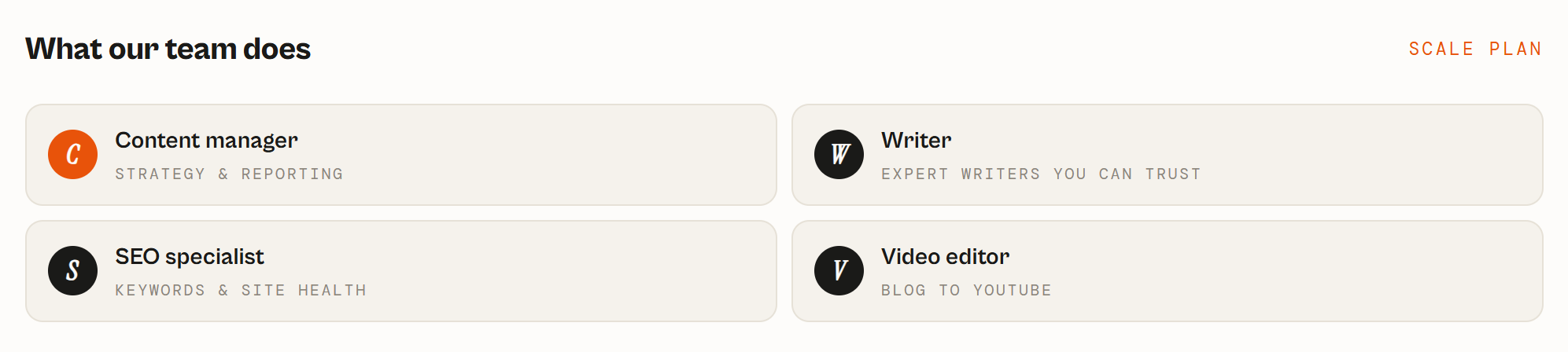
A fractional team can help when work comes up regularly and calls for several skills at part-time capacity. Say you want to publish every month and need someone to research topics, write articles, and get them live. A fractional content team can cover those steps on a recurring basis.
Explore IreneChan.co’s Fractional Content Marketing service.
Once you’ve chosen the type of support, write down what you want that person or team to deliver first.
Define the Role Before You Start Recruiting
A short role brief tells candidates what they’ll own, who they’ll work with, and what they should deliver first. It also gives you clear criteria for evaluating candidates.
Write down what success looks like in the first month
A first-month goal should spell out what the person owns, what they need from you, and how you’ll review their work.
By the end of their first month, an onboarding contractor could deliver a setup checklist and two short walkthrough videos. Give them a test account. Have a founder follow the instructions using a fresh account to see if any steps are unclear.
If you’re handling recruitment yourself, read our guide to hiring without an HR department.
Give Early Team Members Clear Ownership
Give new team members a clear area to own and a point of contact when they need help.
Plan the first two weeks
Use the role brief to decide what the new team member needs to learn and what they can take on first.
- On day one, share the essentials. Set up access to their tools, explain the team’s current priorities, and introduce the people they’ll work with.
- In week one, walk through how the team works. Agree on a first assignment, what a good result looks like, and which decisions they can make on their own.
- In week two, review their first piece of work together. Give specific feedback, clear up any blockers, and agree on what they’ll own next.
For a closer look at onboarding and feedback, read how we support remote freelancers and clients after hiring.
Revisit the team plan after the milestone
After the milestone, check what improved and what still takes up the founders’ time. Did the new team member take ownership of the work you hired them to do? Where do they still need help or approval?
Use those answers to decide what to change. You might clarify who makes decisions, improve a process, or bring in more help if the workload keeps growing.
How to Build a Startup Team Around Your Next Milestone
Start with your next milestone and identify the work your team needs help with. Choose the kind of support that fits the workload. Before someone starts, agree on what they’ll own and what you want them to accomplish in their first month.
If you’ve defined a contract role and need help finding the right person, explore IreneChan.co’s Full HR Service.
FAQs: Building a Startup Team
How many people do you need to start a startup?
You can start on your own or with a small team. What matters is who can build the product, find customers, and support them. One person can cover several of those responsibilities early on.
When should a startup make its first hire?
Consider hiring when recurring work delays an important goal, and you can define what the new hire should own. Make sure your budget can cover the role long term.
Can you build a startup team on a small budget?
Yes. Keep work the founders can handle in-house and bring in help for specific gaps. A contractor could create setup guides, while a fractional team could handle recurring work like content marketing.
Should a startup hire a generalist or a specialist first?
A generalist can help when one role spans related tasks, such as onboarding customers and answering support questions. A specialist makes sense when a specific skill is holding up progress, such as fixing a complex integration.
About Stephanie Chan
Stephanie Chan is a writer and content manager at IreneChan.co. She has written and edited hundreds of blog posts for the past 4 years. She loves to cook and travel.
More from Stephanie →