


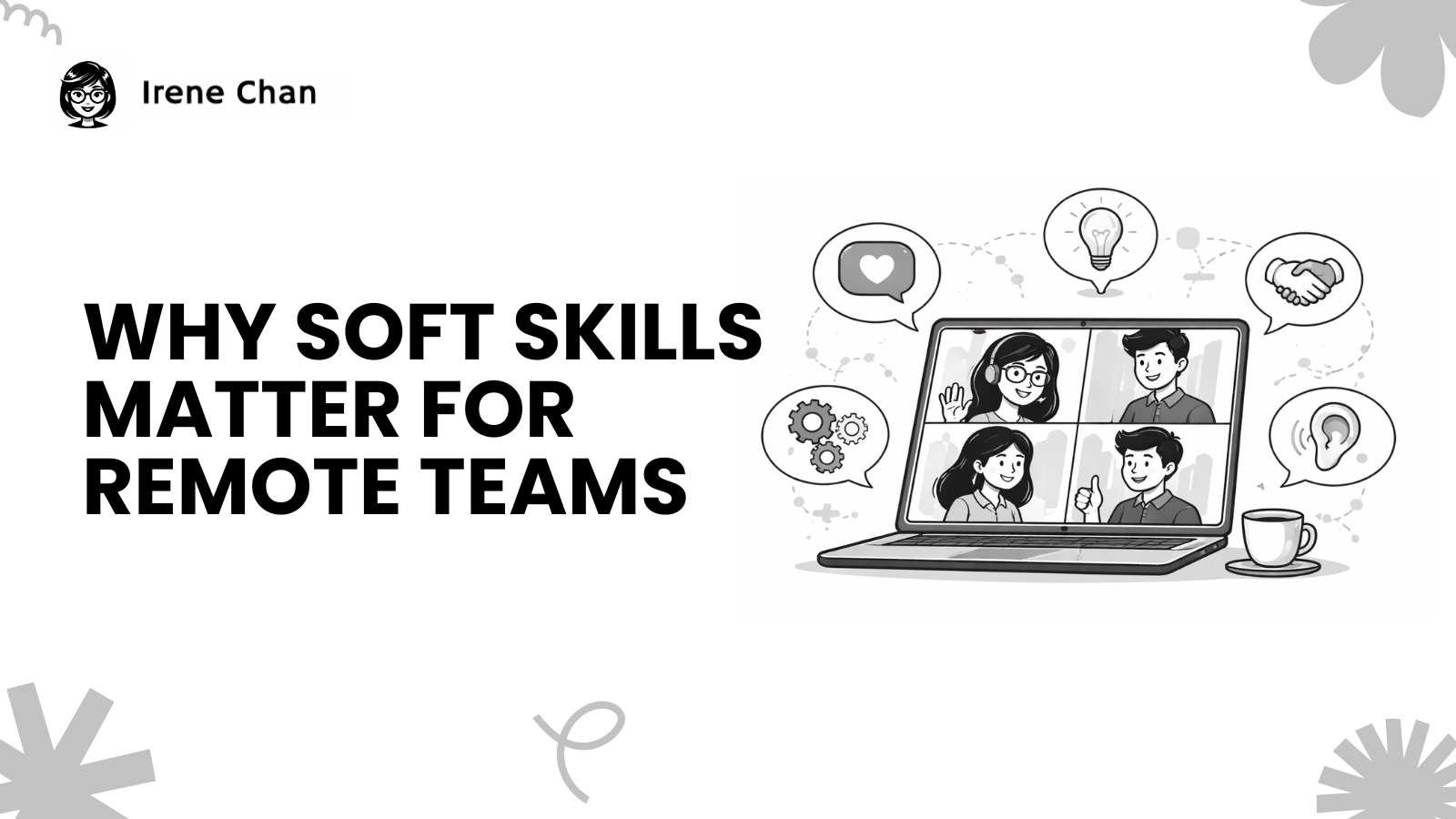
Throughout my HR career, I’ve met many talented people who are highly skilled in their field. They know their tools well and they understand the technical side of their work. Many of them do excellent work and are very capable in their roles.
But over time, I’ve also noticed something else.
Technical ability alone does not always determine long-term success in a team. In many cases, the difference comes from how someone communicates, gives and receives feedback, and takes responsibility for their work.
These qualities, or soft skills, shape how people work together. They also play a big role in hiring, especially when you’re building a team without a formal HR structure. We shared more about this in our guide on how startups can hire the right people without a full HR team.
In remote teams, these soft skills matter even more. When people work from different countries, time zones, and cultures, communication and accountability become the foundation of good collaboration.
Over time, I realized that investing in soft skills is not only about training. It also reflects how much a company cares about the personal success of its team members, as well as its standards and culture.
What Soft Skills Actually Look Like at Work
When we talk about soft skills, we are really talking about professional maturity. It includes communicating clearly, listening carefully, and responding thoughtfully even when conversations are not easy. It also includes receiving feedback without becoming defensive and being open to learning from it.
Another part of it is following through on commitments, acknowledging mistakes, and trying to improve over time. They affect how people solve problems, support one another, and maintain trust with clients. In remote work environments, these behaviors can become even more visible because communication often happens through written messages or short calls.
A clear message or a thoughtful response can make collaboration much easier.
The Soft Skills Remote Teams Rely On Most
Remote teams operate very differently from traditional office teams. There are fewer quick conversations to clarify things. Most communication happens through chats, written updates, scheduled calls, or shared documents. Because of this, communication often needs to be more intentional.
When these skills are present, teams often experience:
- Clearer communication
- Fewer misunderstandings
- Smoother problem-solving
- Stronger working relationships with clients
These qualities support steady growth over time. They also help teams maintain trust and professionalism even when challenges come up.
This is especially important for us because many of our clients are startups building lean teams. You can see how this works in our guide on building an AI-assisted content team in the Philippines. Their teams move quickly and often operate with limited resources. Every team member plays a meaningful role in keeping work moving forward.
How to Build Soft Skills in a Remote Team
Within our team, we aim to support the development of soft skills in a simple and practical way.
We started using Coassemble, a knowledge-sharing platform that helps organize training into short, structured lessons, to manage some of our internal training. This made it easier for the team to go through topics like communication and feedback at their own pace.
We use a knowledge-sharing platform like Coassemble to manage our internal training. Its AI turns uploaded content into short, structured lessons, so the team can learn topics like communication and feedback at their own pace.

To support this, we created short courses that focus on communication, feedback, and accountability.
So far, we have rolled out two courses.
Course 1: Receiving Feedback with a Growth Mindset
This course focuses on how team members can receive feedback openly and see it as an opportunity to learn.

Course 2: Giving Clear and Effective Feedback
This course focuses on sharing feedback in a respectful and constructive way so conversations lead to clarity and improvement rather than confusion.

We also have two more courses currently in development.
Professional Communication Standards
This upcoming course will focus on writing clear messages, managing tone in remote conversations, and keeping communication professional and easy to understand.
Accountability and Follow Through
This upcoming course will focus on responsibility, transparency, and the importance of following through on commitments.
These lessons are simple and practical. They focus on situations people encounter in everyday work, especially in remote teams.
Final Thoughts
Technical ability often opens the door to opportunities, but soft skills help people grow and work well with others over time.
They shape how teams communicate, solve problems, and maintain relationships with clients.
In remote teams especially, these skills become essential. It’s crucial to keep paying attention to the human side of work and how people continue developing these skills.
When people grow in both skill and mindset, the entire team grows with them.
Looking to build a remote team that communicates well and works with accountability? We help founders hire and manage remote talent, so you can focus on growing the business.
FAQs About Soft Skills for Remote Teams
What are soft skills in remote work?
Soft skills in remote work include communication, accountability, listening, and the ability to work well with others even when teams are distributed across locations.
Why are soft skills important for remote teams?
Remote teams rely heavily on written communication and scheduled calls. Strong soft skills help reduce misunderstandings and improve collaboration.
Can soft skills be trained?
Yes. Many soft skills can be improved through practice, feedback, and structured training that focuses on real work situations.
What soft skills are most important for remote employees?
Clear communication, accountability, openness to feedback, and the ability to work independently are some of the most important skills in remote teams.
What is Coassemble and how is it used for training?
Coassemble is a platform used to organize training materials and short courses. It allows teams to structure lessons and make learning easier to access.
Why do some remote teams use platforms like Coassemble?
Platforms like Coassemble help teams organise learning in one place. You can create short courses and start with templates for onboarding, product training, policies, or sales. Teams can copy and adjust them, which makes it easier to set up training quickly.


