


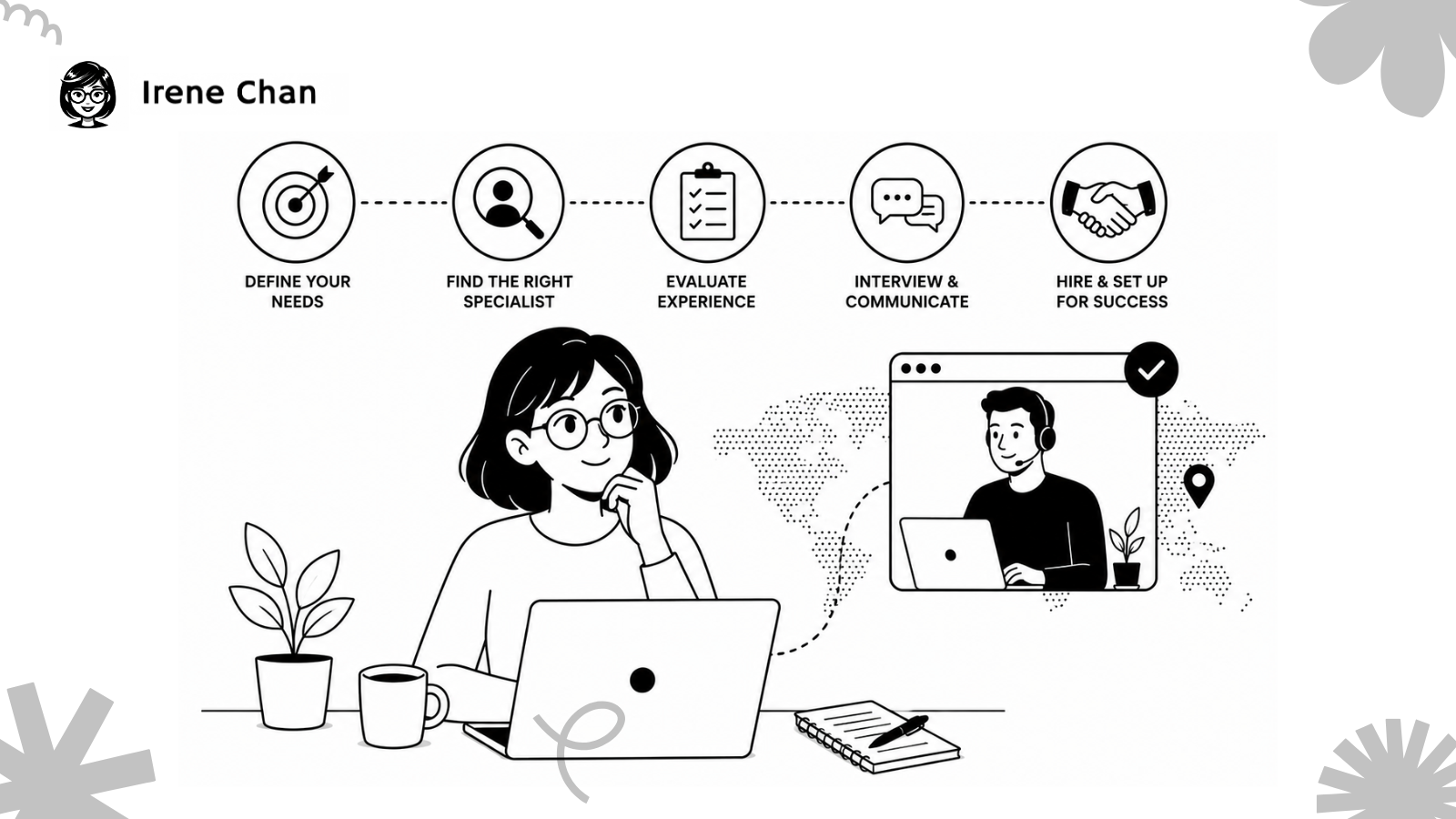
At IreneChan.co, we’ve helped startups hire for customer support, marketing, operations, and other remote roles. Recently, we helped fill a Meta Ads Specialist position for a growing family-focused organization.
The role seemed straightforward. The requirements were clear and the scope was well defined.
One thing became clear during the search. Hiring Meta Ads Specialists involved much more than looking at portfolios, certifications, or campaign results.
This article walks you through the following:
- What stood out during the hiring process
- What to look for when evaluating candidates
- What qualities separated the strongest candidates from the rest
- How to decide between freelance, part-time, and retainer arrangements
Why Many Startups Hire a Meta Ads Specialist
Many founders manage Meta ads themselves in the beginning. Others hand it off to a marketing generalist.
As campaigns grow, so does the workload. Audience targeting, creative testing, reporting, budgets, tracking, and optimization all require ongoing attention. This is often when businesses start looking for a Meta Ads Specialist.
Looking Beyond the Resume
For this search, we received around 90 applications across LinkedIn and Indeed. Many candidates had experience running Meta ads. Some had impressive portfolios and certifications. Others had worked across multiple industries and markets.

Several candidates looked qualified. But once we started reviewing applications more closely, the pool narrowed quickly. Only a small group progressed to interviews. From there, two candidates were recommended to the client, and one was ultimately hired.
One thing that stood out throughout the process was that technical experience alone wasn’t enough to make someone a strong candidate.
What to Look For When Hiring a Meta Ads Specialist
Candidates were asked to complete a short assessment before moving to interviews. Rather than focusing on technical knowledge alone, the assessment was designed to understand how they think about campaigns, data, communication, and decision-making.


Instead of asking purely technical questions, candidates were asked to:
- Walk through a campaign they managed from start to finish
- Explain how they improved results over time
- Share examples of ad copy and testing strategies
- Discuss campaigns that didn’t go as planned
- Share how they collaborate with designers and creative teammates
- Discuss how they would market to the client’s target audience
The goal wasn’t to test technical knowledge alone. Instead, we focused on how candidates problem-solve, communicate their thinking, and apply their experience to real situations.
What Made the Strongest Candidates Stand Out
The two finalists had different backgrounds and experiences, but a few things appeared consistently in both applications.
They Could Explain Their Thinking
Most candidates could talk about campaign metrics.
The stronger candidates went a step further. They could explain why they made certain decisions, what they learned from campaign performance, and how they would approach the next step.
For example, one candidate explained that when conversions dropped, she didn’t focus only on the ads. She reviewed lead quality, landing pages, and audience targeting before making changes. Another candidate described checking tracking, user behavior, and conversion paths before deciding what to test next.
These answers revealed much more than campaign metrics alone. They showed how candidates think through problems and make decisions.
They Looked Beyond Ad Metrics
Another thing that stood out was how often the strongest candidates connected campaign performance back to business goals.
One candidate discussed improving lead quality rather than simply increasing lead volume. Another talked about adjusting campaign messaging based on feedback from the sales process. In both examples, the focus wasn’t only on improving ad metrics; it was on generating better outcomes for the business.
The strongest candidates viewed ads as one part of a larger customer journey rather than an isolated marketing channel.
They Took Ownership
The strongest candidates also approached challenges differently. When discussing campaigns that underperformed, they focused on what they tested, what they adjusted, and what they learned.
There was very little blaming of algorithms, platforms, or audiences. Instead, there was a clear sense of ownership over the outcome.
Key Takeaways From This Hiring Process
Every hiring process is different, but a few themes kept coming up throughout this search. These were some of the qualities and patterns that appeared consistently among the stronger candidates.
Strong Candidates Look Beyond ROAS
Return on Ad Spend (ROAS) was discussed throughout the hiring process, but it wasn’t the main thing that separated stronger candidates from the rest.
Several candidates could talk about campaign performance. Fewer could explain what they would do when results changed, how they would investigate issues, or what they would test next.
For example, one candidate shared that a campaign may generate strong click volume but still underperform if the leads are not a good fit. Instead of focusing only on ad metrics, she emphasized looking at the quality of inquiries being generated and whether they aligned with the client’s goals.
Experience Often Reveals More Than Certifications
Many candidates had certifications and formal training.
While those can be helpful, some of the strongest insights came from candidates sharing actual campaigns they had managed, challenges they had faced, and lessons they had learned along the way.
For example, a candidate shared how we managed a lead generation campaign for a local service business. Rather than focusing only on ad performance, he talked about improving lead quality through better targeting, refining form questions, and connecting campaign decisions to what happened after a lead was generated.
What stood out was how he clearly explained the reasoning behind his decisions and how ads fit into the broader customer journey.
Examples like this often reveal more about how candidates work than a certification alone.

Example of the candidate summary shared with the client during the hiring process. Personal and company information has been removed for privacy.
Communication Matters More Than You Might Expect
This was one of the biggest things that stood out during the search.
Meta Ads Specialists spend a lot of time explaining performance, sharing recommendations, and explaining results to clients or team members.
The strongest candidates were able to communicate complex ideas clearly and explain their strategies and workflow in a way that was easy to follow.
One candidate described how she worked with a creative teammate by sharing performance data and using those insights to guide future content.
As she explained, “By seeing exactly which visuals or hooks were driving the leads, the strategist could pivot their production focus toward the styles that resonated most with our audience.”
It was a simple explanation, but it clearly showed how performance data, creative production, and campaign strategy worked together.
Communication often gets overlooked when hiring technical roles, but it can have a significant impact once someone joins a remote team. It’s also one of the reasons soft skills matter in remote work environments. We share more about that in Why Soft Skills Matter for Remote Teams.
Clear Role Expectations Make Hiring Easier
Another takeaway during the search was the importance of having a clearly defined role.
For this position, the client was looking for more than someone who could manage Meta Ads campaigns. The role also included ad copywriting, performance reporting, and collaboration with an in-house creative team.
That clarity helped narrow the search. It became easier to identify candidates whose experience aligned with what the client was actually looking for.
Freelance, Part-Time, or Full-Time?
One interesting conversation during the hiring process was around how Meta Ads Specialists prefer to work.
One finalist preferred working on a monthly retainer rather than strict hourly tracking. His perspective was that Meta Ads work is often measured more effectively through outcomes and deliverables than by the number of hours worked.
It was a good reminder that experienced specialists often think differently about how their work creates value.
For startups, the right setup depends on the business, campaign complexity, and budget. Many companies start with a part-time arrangement and adjust as campaigns grow.
What Ultimately Made the Difference
The candidate who was hired had strong technical experience, but that wasn’t the only reason she stood out.
After working together, the client highlighted qualities such as reliability, clear communication, consistency, and a willingness to share recommendations and opinions.
One example they specifically mentioned was her consistency with weekly check-ins and performance updates. They also appreciated that she was honest and upfront when discussing results and situations. What stood out to the client wasn’t only her ability to run campaigns. It was the way she communicated, collaborated, and approached her work.
Those qualities may not always appear on a resume, but they often have a significant impact once someone joins a remote team.
Consistent communication and accountability are often some of the things clients continue to value long after the hiring process is over. You can learn more about that in our article: How We Approach Performance Reviews in Remote Teams.
Final Thoughts
This search reinforced something our agency sees across many hiring projects. Finding Meta Ads candidates wasn’t particularly difficult. Evaluating who could genuinely contribute to the role took more time.
The candidates who stood out weren’t necessarily the ones with the most impressive portfolios or the most experience. They were often the ones who could explain their thinking clearly, communicate openly, and take ownership of their work.
For founders hiring remotely, those qualities can be just as important as technical expertise.
If you’re looking to hire a remote Meta Ads Specialist, IreneChan.co can help with sourcing, screening, onboarding, and ongoing support for remote teams.
FAQs: Hiring a Remote Meta Ads Specialist
What does a Meta Ads Specialist do?
A Meta Ads Specialist manages Facebook and Instagram advertising campaigns. Depending on the role, this can include campaign setup, audience targeting, ad copywriting, optimization, reporting, and performance analysis.
How much experience should a Meta Ads Specialist have?
It depends on the complexity of the campaigns and the level of support needed. Some startups can work successfully with junior specialists, while others may need someone with several years of hands-on experience managing campaigns independently.
Should I hire a Meta Ads Specialist part-time or full-time?
There isn’t a single right answer. The best arrangement depends on your budget, campaign complexity, workload, and business goals. Many startups start with part-time support and adjust as their advertising needs grow.
What should I look for besides technical skills?
During this search, communication was one of the biggest differentiators between candidates. The strongest candidates could clearly explain their decisions, discuss campaign performance, and share recommendations in a way that was easy to understand.
How do I evaluate a Meta Ads Specialist during the hiring process?
Look beyond resumes and certifications. Ask candidates to explain past campaigns, discuss challenges they faced, and walk through how they approached decision-making. Their thought process can often tell you more than a portfolio alone.


